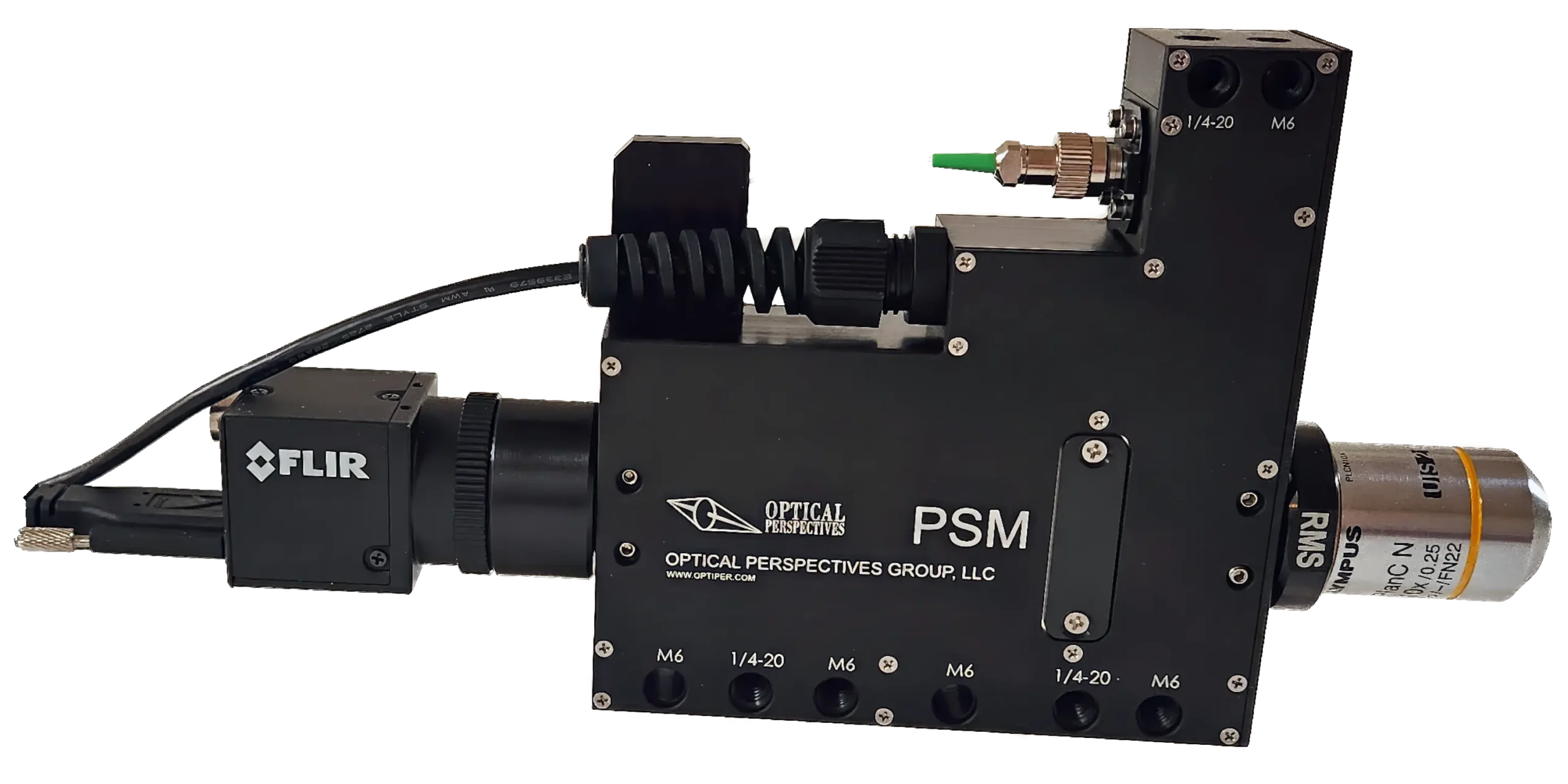
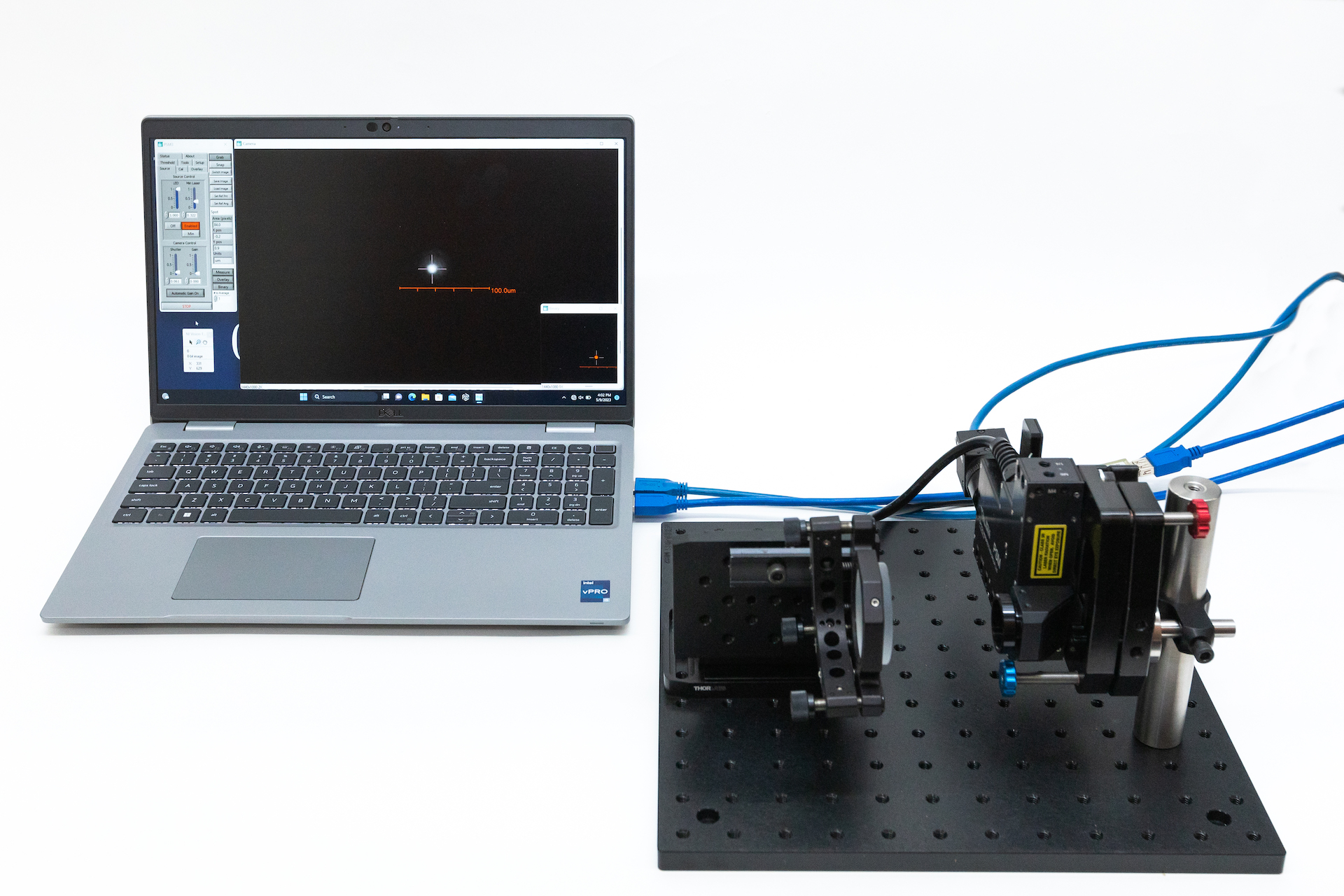
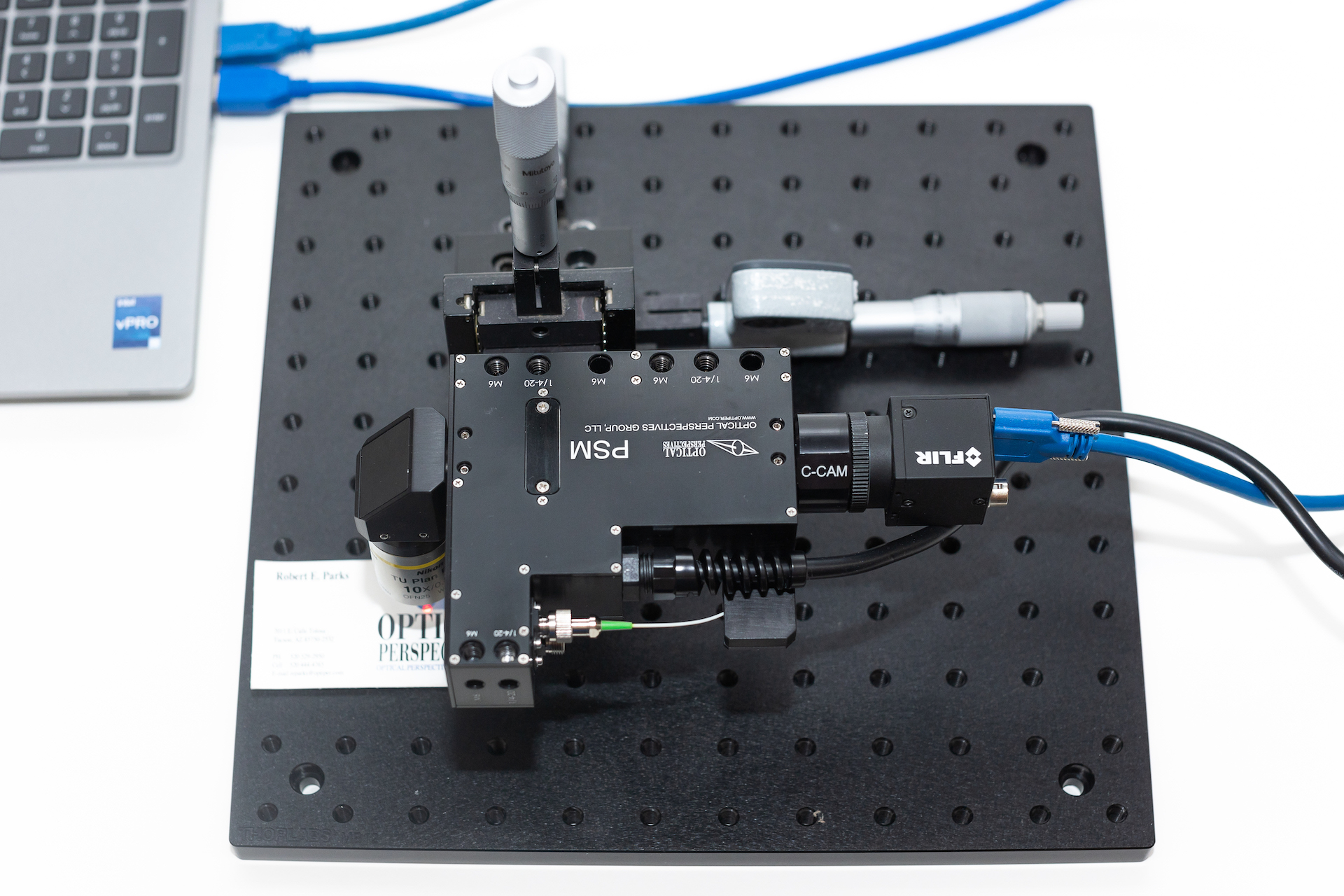
The Point Source Microscope (PSM)
A complete, self-contained, portable metrology system.
To learn more about the PSM’s unique features and the origin of the PSM download the PSM features and history PDF.
 Powered by Bioz
The Point Source Microscope (PSM) stands out from other optical alignment tools due to its precision, speed, ease of use, and versatility. Unlike laser-based systems, optical microscopes, and traditional alignment tools, the PSM offers a complete solution for rapid, high-precision optical alignment across a wide range of applications. By combining automated calibration, real-time feedback, and user-friendly interfaces, it provides a higher ROI and ensures consistent accuracy in industries where precision is paramount.
- The PSM comes as a complete system ready to use as soon as the computer boots.
- The PSM comes complete with Python-based PSM Align-4 software
- The centroid data is available for external feedback to other systems or the centroid data can be stored for later use.
- Full field video microscope images and point source Star images can be saved in PNG format for later analysis and use.
- We guarantee that the PSM will be free of defects for a year from date of purchase
Optical Perspectives Group Now Listed on Bioz — AI Search Engine for Scientific Experimentation
Through this listing, Bioz highlights 43 peer-reviewed scientific papers that cite the Point Source Microscope (PSM) in diverse research areas. Many of these papers were previously unknown to us and demonstrate the wide adoption of the PSM in fields such as meta-lens design, optical metrology, precision alignment, and astronomy. The PSM listing received an impressive Bioz score of 93 out of 100, reflecting strong performance in mentions, recency, and scientific impact.
What makes the Bioz platform especially powerful is its ability to direct researchers immediately to the relevant content within each cited publication — showing exactly how the PSM was used in experimental setups and optical system alignment. This visibility underscores the growing recognition of the PSM as a trusted optical alignment and metrology instrument in laboratories around the world.
Researchers can explore the Bioz PSM listing here

What Can You Align with the PSM?
The PSM finds centers of curvature, focus points and reflected spots, so one instrument covers most optical alignment jobs on the bench, on a CMM or with a laser tracker. Each guide below shows the method step by step.
Lens centering
Find the centers of curvature of a lens and center it on the reference axis.
Compare 4 lens centering methods →Off-axis parabolas
Locate the focus and axis of an off-axis parabola (OAP) during alignment.
Read Chapter 18 →Prisms and retroreflectors
Locate the apex of retroreflecting prisms and check prism alignment.
Prism alignment with the PSM →Microscope objectives
Align a tube lens to a high-magnification microscope objective.
Read Chapter 19 →CMMs and laser trackers
Use the PSM as a non-contact probe on a CMM or with a laser tracker to locate centers of curvature in 3D space.
Laser tracker alignment →Angles and wedge
Remove the objective and use the PSM as an autocollimator to measure angles and wedge in windows and prisms.
The PSM as an autocollimator →


